Understanding Foundation Plumbing Leaks in Lodi
A slab leak occurs when the pressurized domestic water pipes embedded beneath or directly within a concrete foundation develop fractures, corrosion pits, or loose joints. In San Joaquin County, residential communities feature single-story ranch houses and tract developments constructed from the 1960s through recent decades. In these homes, copper supply tubing was laid into aggregate soil beds before the concrete foundation was poured overhead.
When a leak develops beneath the foundation, pressurized water escapes continuously into the subgrade. If you suspect a pressurized failure beneath your flooring, working with an experienced slab leak plumber Lodi residents rely on is essential to prevent foundation settlement, structural cracking, and widespread moisture damage. Ignoring a water leak under slab Lodi conditions can rapidly destabilize the subgrade soil, resulting in severe flooring damage and structural compromise.
Why Slab Leaks Happen in Lodi Homes
Lodi homes face two primary environmental drivers that trigger underground pipe degradation: aggressive hard water chemistry and expansive clay soil movement. Central Valley municipal water supplies carry elevated mineral concentrations. Over decades of service, friction from high velocity flow combined with mineral deposits erodes the internal protective patina inside copper piping, creating tiny pitting points.
Simultaneously, the expansive clay soils common across San Joaquin County swell significantly during rainy winter months and shrink during hot, dry Central Valley summers. This cyclical seasonal movement puts physical shear stress on rigid copper tubing embedded beneath concrete foundations. Any direct contact between uninsulated copper pipes and sharp gravel or rebar will eventually wear a hole into the pipe wall under foundation movement.
Warning Signs Checklist for Lodi Homeowners
Watch for these classic indicators of pressurized under slab leak repair Lodi situations:
- Warm spots on the floor: Hot water supply leaks create noticeable thermal zones across tile, hardwood, or carpet flooring.
- Sound of running water: A distinct rushing or hissing sound in baseboards or flooring while all faucets and toilets are shut off.
- Water meter spinning: The leak indicator or low flow triangle on your municipal water meter rotates continuously when no water is running in the house.
- Unexplained high water bills: A sudden spike in monthly utility charges indicates thousands of gallons escaping beneath the foundation slab.
- Damp flooring or wet carpet: Moisture seeping upward through micro-cracks in the concrete foundation, staining flooring materials.
- Hairline foundation cracks: Visible cracking along floor tiles, baseboards, or drywall caused by localized soil swelling or erosion beneath the slab.
- Musty odors or mildew: Persistent damp smells trapped under carpet padding, floor baseboards, or inside closed ground-level closets.
Immediate Steps to Take Right Away
When you first notice signs of a leak under foundation Lodi structures, swift initial action prevents extensive cosmetic and structural damage. First, locate your home main water shutoff valve, typically located near the front hose bib or inside the garage, and turn it clockwise to halt incoming pressure. Next, walk around your home to take clear photographs and videos of damp carpets, warm flooring areas, and the current reading on your municipal water meter.
Documenting the date and specific initial observations creates an accurate record for insurance adjusters. After securing the main supply valve, call our dedicated line at (888) 205-7875 to arrange prompt non-invasive electronic diagnostics before any concrete is disturbed.
Suspect a Leak Under Your Foundation?
Call our local Lodi diagnostic line to speak directly with an expert technician. Non-invasive acoustic location protects your concrete floor.
Call (888) 205-7875How Detection and Repair Work Step by Step
Resolving an underground line failure involves a structured diagnostic protocol followed by permanent engineering remedies. We never start by randomly breaking open concrete floors. Instead, our process follows rigorous non-destructive stages:
- System Isolation: We isolate the cold water supply from the hot water lines using isolation valves to verify which specific line is losing pressure.
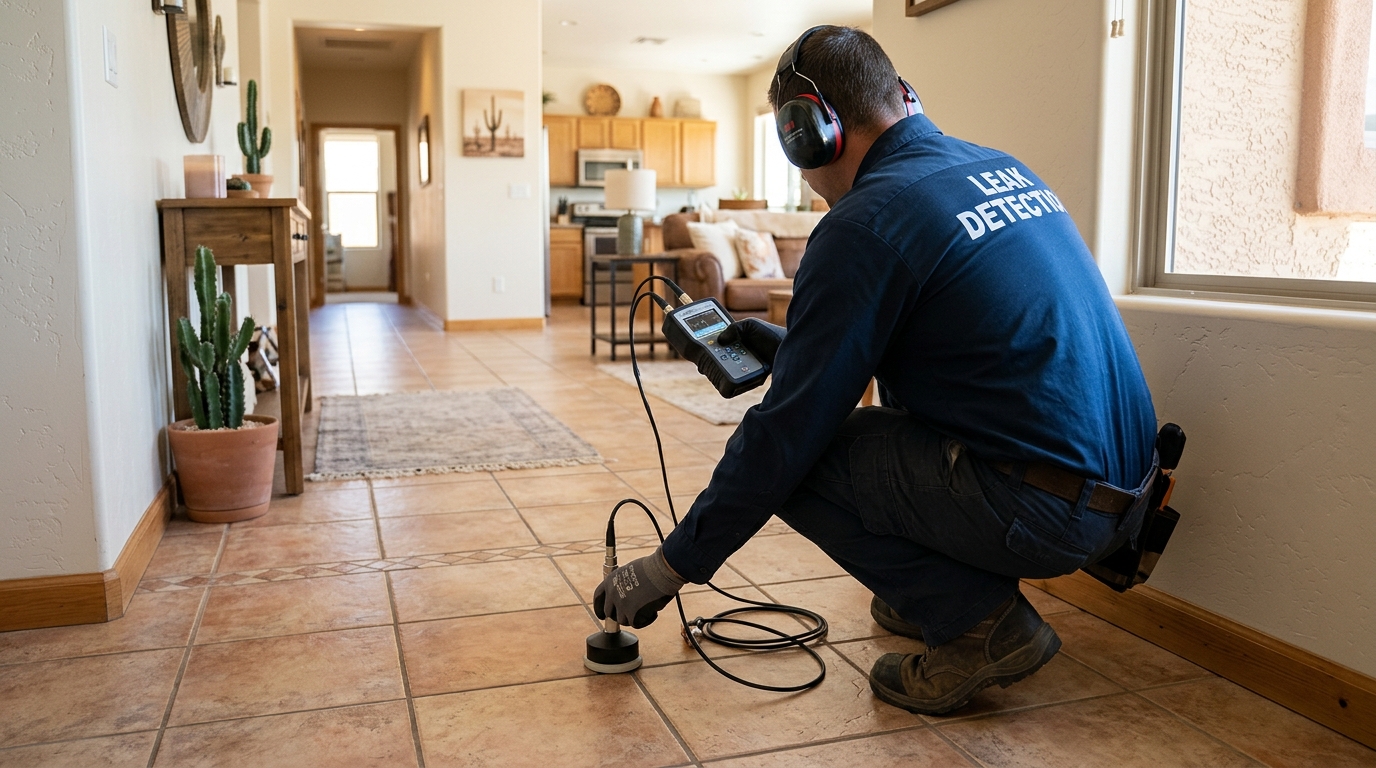
- Acoustic and Electronic Tracing: Specialized ground sensors amplify underground sonic frequencies generated by pressurized water spraying into the subgrade soil bed.
- Infrared Thermal Mapping: Thermal imaging cameras map temperature gradients on the concrete slab, identifying the precise origin of hot water line leaks.
- Electromagnetic Pipe Locating: Signal transmitters track the exact geometric path and depth of the copper line beneath your foundation.
- Repair Execution: Once the exact failure coordinates are pinpointed, we evaluate whether a direct spot repair, overhead reroute, or whole-house repipe provides the most durable long-term solution.
Repair Options and Cost Factors
Homeowners often inquire about slab leak repair cost Lodi considerations. Rather than flat rates, repair expenses depend heavily on physical factors unique to each residence. The primary repair paths include:
Direct Spot Repair
Involves opening a small, precise window through the concrete slab directly over the leak, excavating the gravel, cutting away damaged copper, and brazing in a new section of hard-drawn copper or high-grade tubing. Best suited for newer plumbing systems with isolated physical damage.
Overhead Pipe Reroute
Abandons the failed copper line beneath the slab entirely. A new PEX or copper water line is routed above the foundation through interior walls or attic cavities. This eliminates concrete demolition and preserves finished flooring surfaces.
Key variables influencing overall costs include the location of the pipe failure, flooring type (imported tile, hardwood, or carpet), depth of the foundation, whether the line is hot or cold water, and whether additional aged piping requires whole-home protection.
Comprehensive Related Services in Lodi
We offer specialized plumbing solutions tailored to the unique soil and water conditions found across San Joaquin County:
Slab Leak Detection
Advanced non-invasive electronic diagnostics, acoustic listening disks, and pressure testing locate hidden leaks beneath your foundation without exploratory jackhammering.
Hot Water Slab Leak Repair
Thermal imaging quickly locates failing hot water lines causing warm floor sections, constant water heater running, and elevated energy bills across Lodi homes.
Slab Leak Reroute
Bypass leaking sub-slab lines by installing modern PEX tubing through attics or baseboards, saving your valuable tile, hardwood, and concrete slab intact.
Whole-House Repiping
When repeated slab leaks signal widespread pipe degradation, complete PEX or copper repiping delivers modern durability and total peace of mind.
Water Leak Detection
Locate hidden water leaks inside drywall, above ceilings, behind showers, or along buried exterior yard water service lines before moisture damages structural framing.
Pinhole Leak Repair
Address aggressive chemical pitting and pinhole corrosion in copper piping before single localized leaks multiply into catastrophic foundation flooding.
Slab Leak Insurance Help
Receive detailed diagnostic reports, moisture mapping data, and photographic documentation structured to assist your homeowner insurance claim process.
Serving Lodi Neighborhoods and Neighboring Communities
Our service vehicles operate across Lodi, providing prompt assistance for slab leak repair near Downtown Lodi, as well as suburban neighborhoods near Lodi Lake, residential subdivisions bordering the Mokelumne River, and tracts along SR-99. In addition to Lodi proper, our diagnostic technicians provide trusted coverage for slab leak repair near Galt and slab leak repair near August. Visit our Service Areas page for complete neighborhood details.
Frequently Asked Questions About Slab Leaks in Lodi
How do I know if I have a slab leak in my Lodi home?
Common signs include warm spots on flooring, the sound of water running when fixtures are shut off, a spinning water meter leak indicator, damp carpet or buckled hardwood, and unexplained increases on your monthly water bill.
Is it better to repair a slab leak under concrete or reroute it?
In most older homes, rerouting the pipe through walls or attic space using flexible PEX is faster, less disruptive, and more cost-effective than breaking open concrete floors, especially if the original copper pipe is aging and vulnerable to future leaks.
Does homeowner insurance cover slab leak repairs in California?
Most standard homeowner policies cover the cost of tearing out and restoring access to the slab as well as resulting water damage, while the physical replacement of the plumbing pipe itself is typically the owner's responsibility. Check your policy terms.
How quickly should a slab leak be repaired?
Immediately. Continuous water flow beneath a concrete foundation erodes supporting subgrade soil, leading to foundation settling, structural cracks, and high water utility bills. Shut off your main valve and call a professional right away.